将列表还原为树状结构#
需求来源分析:
在需要存储树结构的情况下,一般由于使用的关系型数据库(如 MySQL),是以类似表格的扁平化方式存储数据。因此不会直接将树结构存储在数据库中,通常是通过邻接表、路径枚举、嵌套集或闭包表来存储。
其中,邻接表是最常用的方案之一,其存储模型如下:
| id | pid | data |
|---|---|---|
| 1 | 0 | a |
| 2 | 1 | b |
| 3 | 1 | c |
该模型代表了如下的树状结构:
1{
2  id: 1,
3  pid: 0,
4  data: 'a',
5  children: [
6    {id: 2, pid: 1, data: 'b'},
7    {id: 3, pid: 1, data: 'c'},
8  ]
9}
大部分情况下,会交给应用程序来构造树结构。
典型题目#
1const list = [
2  { pid: null, id: 1, data: "1" },
3  { pid: 1, id: 2, data: "2-1" },
4  { pid: 1, id: 3, data: "2-2" },
5  { pid: 2, id: 4, data: "3-1" },
6  { pid: 3, id: 5, data: "3-2" },
7  { pid: 4, id: 6, data: "4-1" },
8];解法#
解法一#
递归解法:该方法简单易懂,从根节点出发,每一轮迭代找到 pid 为当前节点 id 的节点,作为当前节点的 children,递归进行。
1function listToTree(
2  list,
3  pid = null,
4  { idName = "id", pidName = "pid", childName = "children" } = {}
5) {
6  return list.reduce((root, item) => {
7    // 遍历每一项,如果该项与当前 pid 匹配,则递归构建该项的子树
8    if (item[pidName] === pid) {
9      const children = listToTree(list, item[idName]);
10      if (children.length) {
11        item[childName] = children;
12      }
13      return [...root, item];
14    }
15    return root;
16  }, []);
17}
时间复杂度分析:最坏的情况下,这棵树退化为链表,且倒序排列。每一轮迭代需要在最后面才找到目标节点。假设有 n 个元素,那么总迭代次数为 n+(n-1) + (n-2) + ... + 1,时间复杂度为 O(n^2)。
解法二#
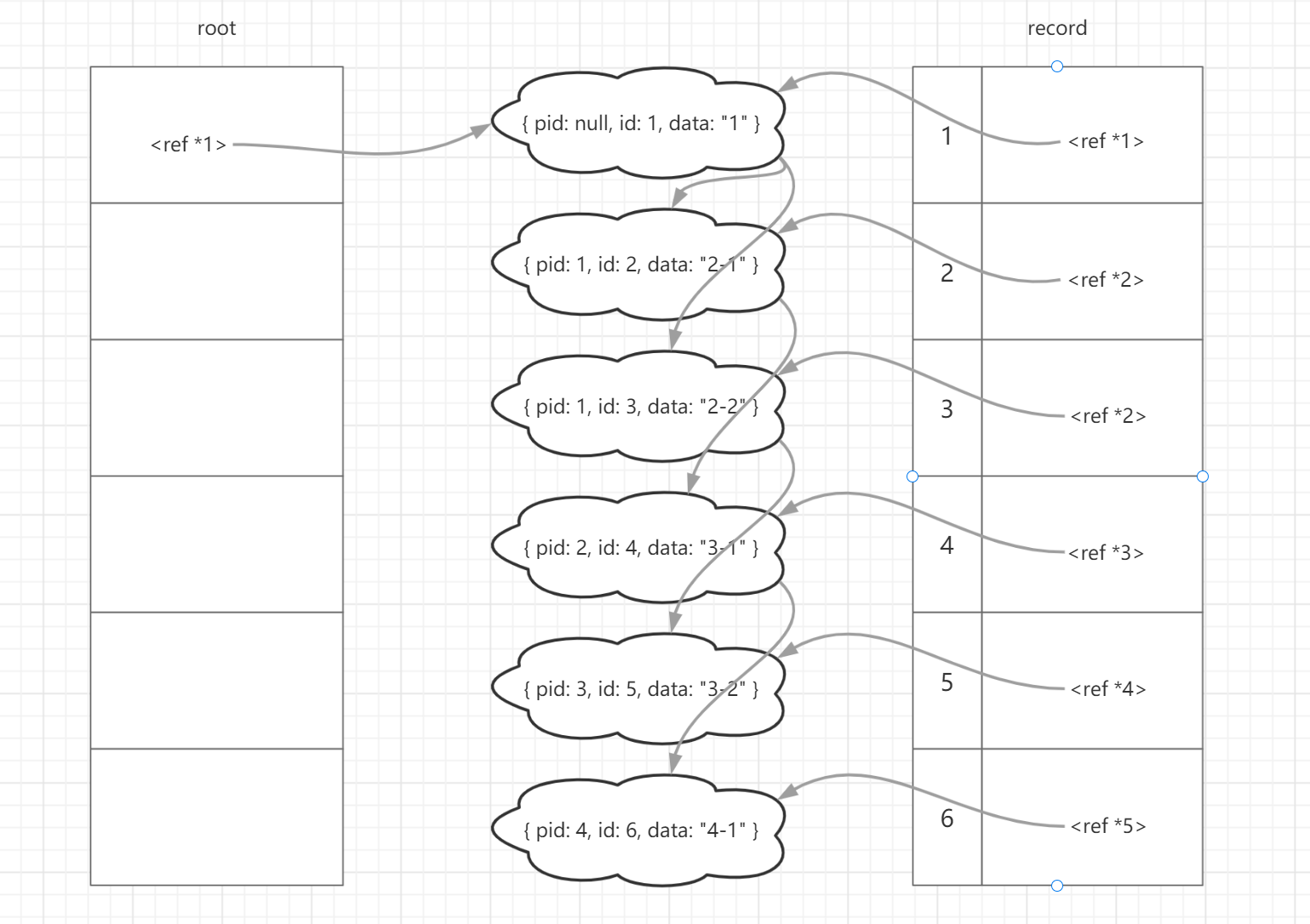
迭代法:利用对象在 js 中是引用类型的原理。第一轮遍历将所有的项,将项的 id 与项自身在字典中建立映射,为后面的立即访问做好准备。 由于操作的每一项都是对象,结果集 root 中的每一项和字典中相同 id 对应的项实际上指向的是同一块数据。后续的遍历中,直接对字典进行操作,操作同时会反应到 root 中。
1function listToTree(
2  list,
3  rootId = null,
4  { idName = "id", pidName = "pid", childName = "children" } = {}
5) {
6  const record = {}; // 用空间换时间,用于将所有项的 id 及自身记录到字典中
7  const root = [];
8
9  list.forEach((item) => {
10    record[item[idName]] = item; // 记录 id 与项的映射
11    item[childName] = [];
12  });
13
14  list.forEach((item) => {
15    if (item[pidName] === rootId) {
16      root.push(item);
17    } else {
18      // 由于持有的是引用,record 中相关元素的修改,会在反映在 root 中。
19      record[item[pidName]][childName].push(item);
20    }
21  });
22
23  return root;
24}
record 字典 与 root 结果集的参考内存引用关系如图所示:
时间复杂度分析:经历了两轮迭代,假设有 n 个元素,那么总迭代次数为 n + n,时间复杂度为 O(n)。
解法二变体#
变体一#
在解法二的基础上,将两轮迭代合并成一轮迭代。采用边迭代边构建的方式:
1function listToTree(
2  list,
3  rootId = null,
4  { idName = "id", pidName = "pid", childName = "children" } = {}
5) {
6  const record = {}; // 用空间换时间,用于将所有项的 id 及自身记录到字典中
7  const root = [];
8
9  list.forEach((item) => {
10    const id = item[idName];
11    const parentId = item[pidName];
12
13    // 如果该项不在 record 中,则放入 record。如果该项已存在 (可能由别的项构建 pid 加入),则合并该项和已存在的数据
14    record[id] = !record[id] ? item : { ...item, ...record[id] };
15
16    const treeItem = record[id];
17
18    if (parentId === rootId) {
19      // 如果是根元素,则加入结果集
20      root.push(treeItem);
21    } else {
22      // 如果父元素不存在,则初始化父元素
23      if (!record[parentId]) {
24        record[parentId] = {};
25      }
26      // 如果父元素没有 children, 则初始化
27      if (!record[parentId][childName]) {
28        record[parentId][childName] = [];
29      }
30
31      record[parentId][childName].push(treeItem);
32    }
33  });
34
35  return root;
36}
时间复杂度分析:经历了一轮迭代,假设有 n 个元素,那么时间复杂度为 O(n)。
变体二#
record 字典仅记录 id 与 children 的映射关系,代码更精简:
1function listToTree(
2  list,
3  rootId = null,
4  { idName = "id", pidName = "pid", childName = "children" } = {}
5) {
6  const record = {}; // 用空间换时间,仅用于记录 children
7  const root = [];
8
9  list.forEach((item) => {
10    const newItem = Object.assign({}, item); // 如有需要,可以复制 item ,可以不影响 list 中原有的元素。
11    const id = newItem[idName];
12    const parentId = newItem[pidName];
13
14    // 如果当前 id 的 children 已存在,则加入 children 字段中,否则,初始化 children
15    // item 与 record[id] 引用同一份 children,后续迭代中更新 record[parendId] 就会反映到 item 中
16    newItem[childName] = record[id] ? record[id] : (record[id] = []);
17
18    if (parentId === rootId) {
19      root.push(newItem);
20    } else {
21      if (!record[parentId]) {
22        record[parentId] = [];
23      }
24      record[parentId].push(newItem);
25    }
26  });
27
28  return root;
29}
时间复杂度分析:经历了一轮迭代,假设有 n 个元素,那么时间复杂度为 O(n)。
代码演示及总结#
- 递归法:在数据量增大的时候,性能会急剧下降。好处是可以在构建树的过程中,给节点添加层级信息。
- 迭代法:速度快。但如果想要不影响源数据,需要在 record 中存储一份复制的数据,且无法在构建的过程中得知节点的层级信息,需要构建完后再次深度优先遍历获取。
- 迭代法变体一:按需创建 children,可以避免空的 children 列表。
目录